
The Knowledge-Driven Execution Platform
KIMS connects execution planning, collaboration, governance, professional methods and organisational learning into one connected execution platform.
It supports every Kaleidoscope transformation by ensuring improvements become repeatable, governed and continuously improved.
Why Organisations Need KIMS
- Most organisations already have projects.
- Most have workflows.
- Many have dashboards.
- Very few have a connected execution system.
KIMS connects decisions, collaboration, governance, evidence and organisational learning so improvements continue long after projects finish.

The Six KIMS Assets
Execution Blueprint
Defines the execution path for every initiative by connecting business capability, projects, governance and expected outcomes.
Workspaces
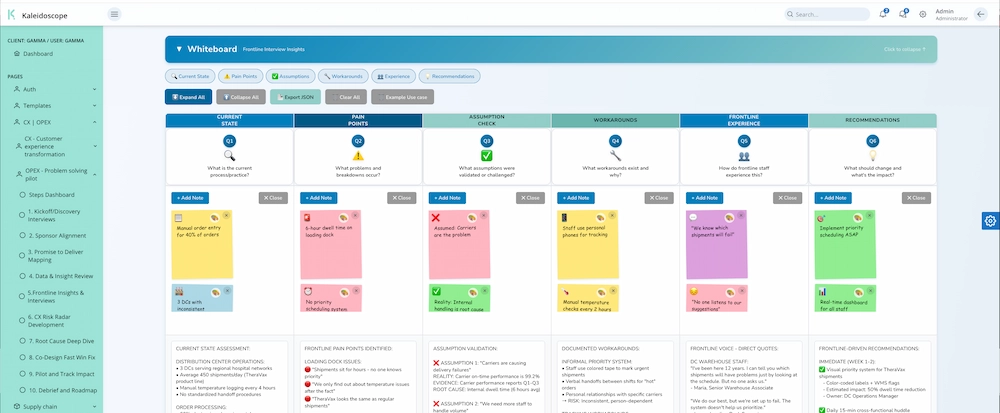
Dynamic collaborative environments automatically created around the Execution Blueprint where teams work, collaborate and capture information.
Templates
Structured execution assets that guide work, capture evidence and standardise best practice.
Professional Techniques
Lean Six Sigma, Operational Excellence and consulting methods embedded within templates and workspaces with AI guidance.
Deliverables
Executive reports, dashboards, evidence packs and business outputs automatically generated from completed work.
Project Management
Coordinates execution, dependencies, milestones, governance and progress across the complete initiative.
How KIMS Connects Execution
KIMS embeds orchestration into daily work through four core functions.
Governance
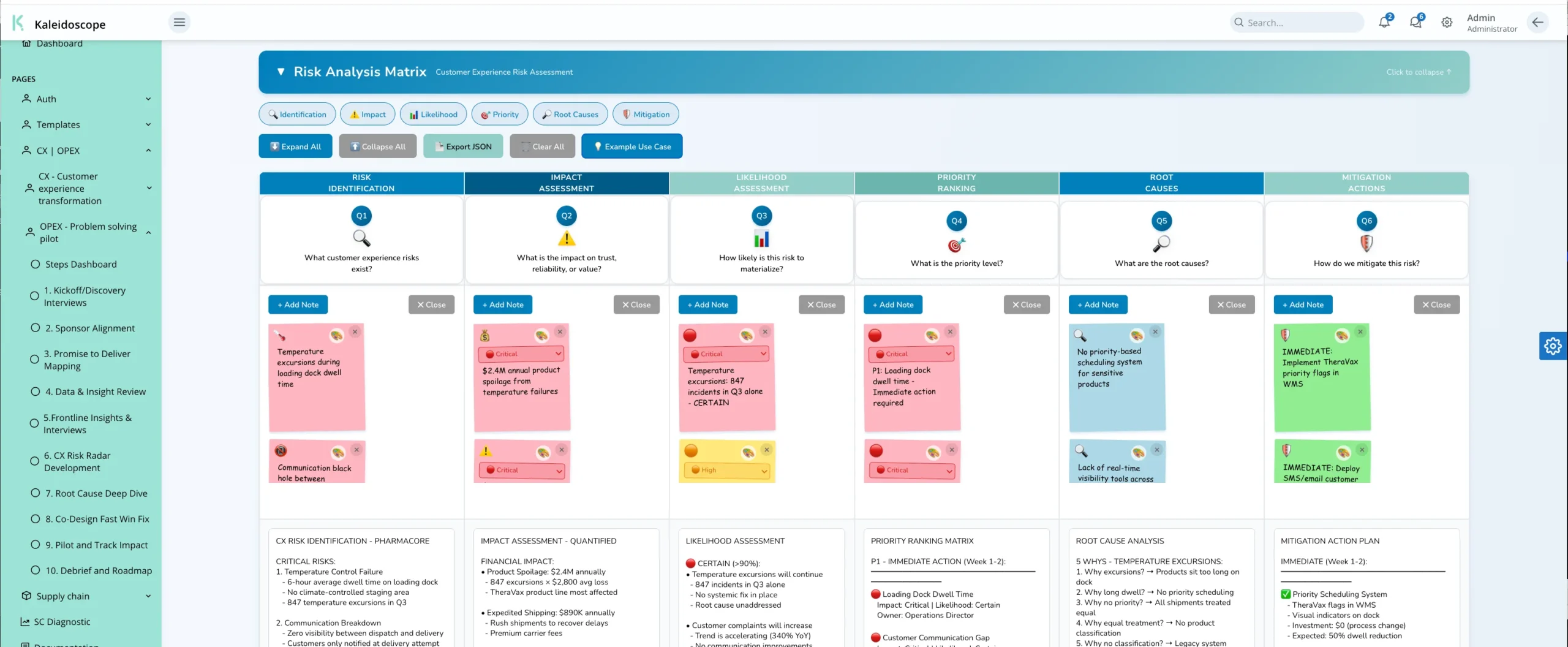
Decision rights, approvals, and escalation logic are explicit.
Orchestrated workflows
Templates translate insight into consistent cross functional execution.
Evidence capture
Observations, decisions, and outcomes are recorded in context.
Learning at scale
Improvement compounds instead of resetting.
Where KIMS fits in the orchestration model
KIMS underpins every stage of the Orchestration Loop.
See the system
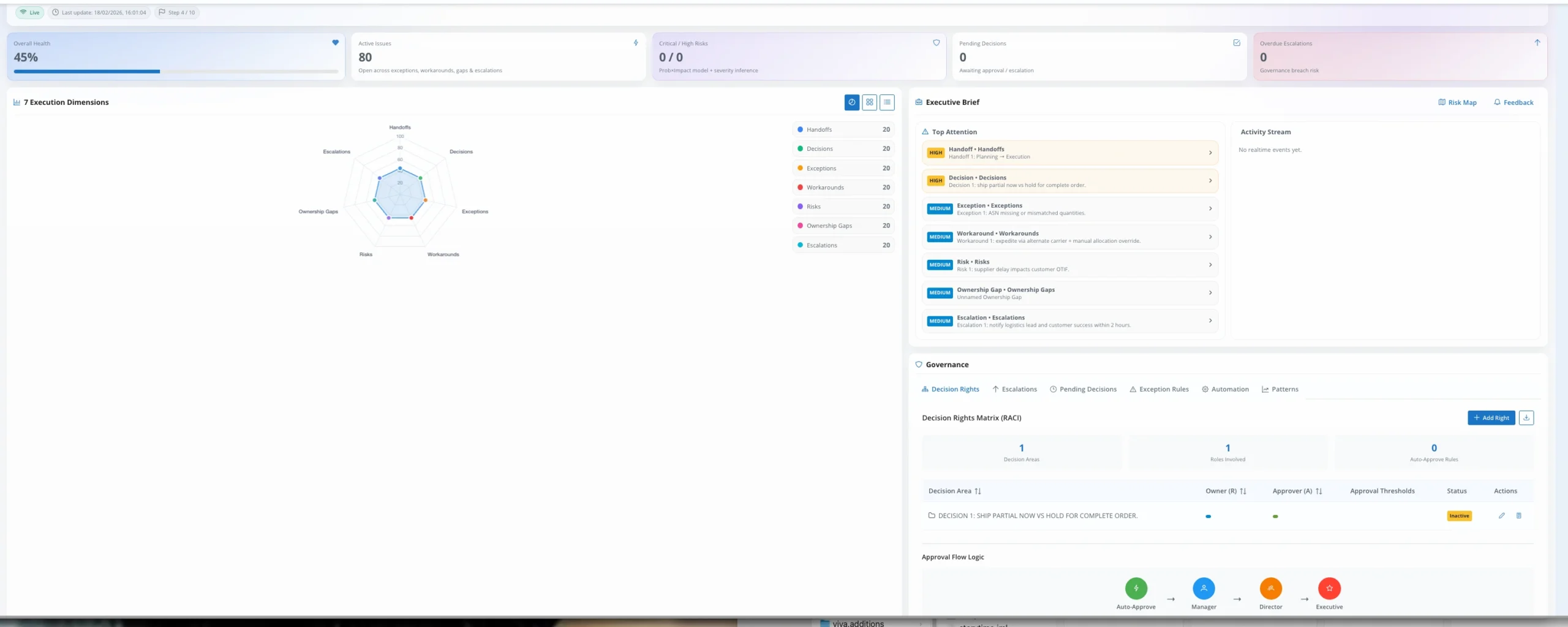
Handoffs, decision points, and performance signals become visible.
Fix what matters most
Prioritisation is anchored in evidence rather than opinion.
Embed and scale
Changes are translated into governance and standard work so performance holds.
Without KIMS, orchestration relies on attention.
With KIMS, it relies on design.
Execution Made Visible
See how KIMS connects projects, guided execution, governance, evidence and organisational learning in one Execution Operating System.
These are not standalone tools.
They form part of a connected execution system that maintains clarity, control, and learning over time.
AI, applied deliberately
KIMS applies AI only where it strengthens execution.
AI supports:
- Pattern recognition across signals and outcomes
- Prioritisation of execution risks
- Consistency in documentation and workflow application
AI does not replace judgement or accountability.
Discipline comes first.
Ownership and control
KIMS is built for organisations that want to own execution, not outsource it.
Team Operations
Teams run the workflows.
Decision Ownership
Leaders own the decisions.
Knowledge Retention
The organisation retains execution memory.
Execution logic lives in the system, not in consultants or individuals.
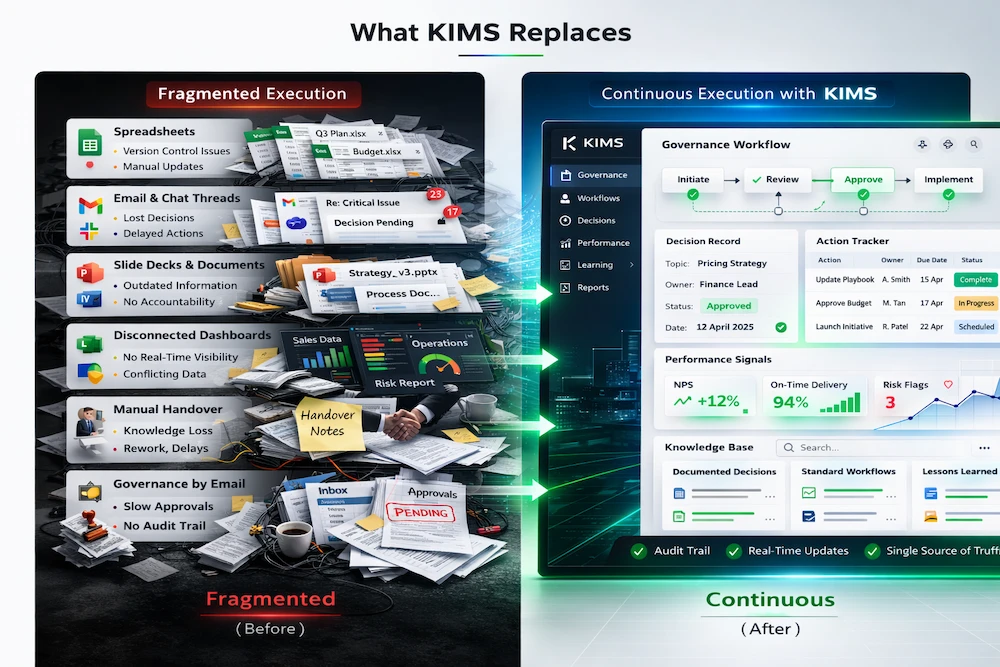
What KIMS replaces
KIMS removes the need to rely on:
- Slide decks as operating memory
- Informal handovers
- Spreadsheet based governance
- Repeated re diagnosis of the same problems
It replaces fragmentation with continuity.
How Access Is Structured
KIMS access reflects the scope of orchestration being embedded.
Organisations typically begin with one of four models:
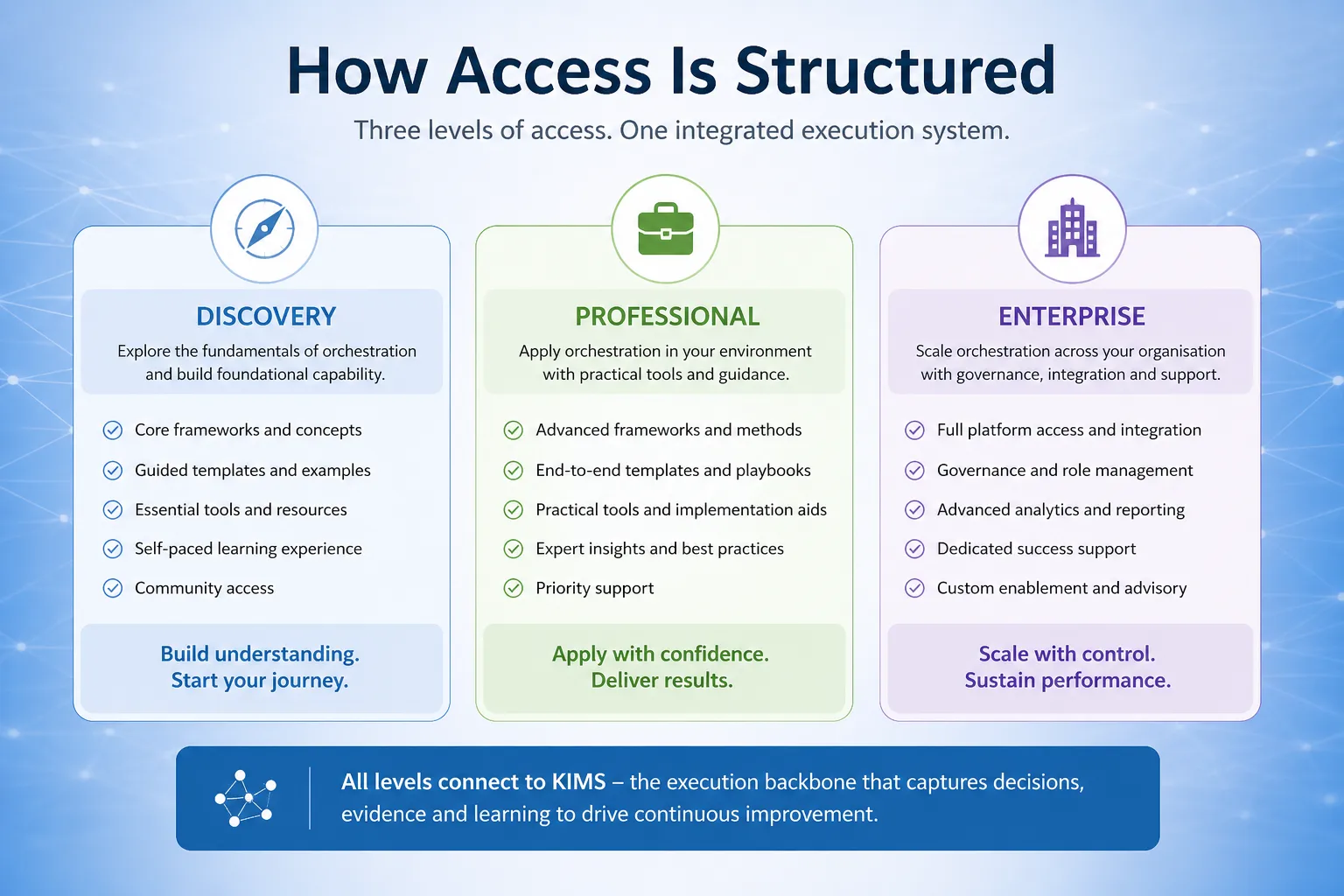
Discovery
Orientation and pilot use
Professional
Individual accountability
Enterprise
System wide execution backbone
Access expands deliberately as orchestration proves its value.
Seeing KIMS in action
KIMS is best understood in real work.
Most leaders begin by reviewing:
- A governance workflow
- A live execution template
- A decision record in context
From there, the system becomes self evident.
Execution systems are adopted deliberately.
